

Add a Fun, Unique Elements to Your Children's Bedroom
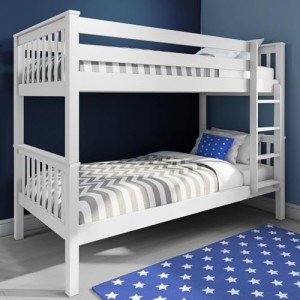
Bunk beds are a unique and fun accessory to any bedroom for children. They also help to maintain the same bedtime routine keeping your children in the same room.
The first decision you'll have to make is whether you want to opt for a ladder or stairs to reach the top bunk. Ladders are less expensive and more accessible for kids to use, however stairs are more stylish and offer more versatility.
Size
When it comes to children bunk beds, size is key. You'll need to think about the height of your child as well as their projected growth in the coming year when you shop for twin-over-full or twin over twin bunk beds. Also, you should take into consideration the space available in your child's room and how much clearance is required under each bed.
The standard twin-over-2-twin bunk beds work well for bedrooms with small children. These beds usually have standard or leaning ladders, metal or wood guard rails at the bottom and on the top, as well as a slot underneath for a pull-out trundle that is ideal for sleepovers. However, if you're looking for a more spacious alternative, a twin-over-full-size bunk bed will provide your kids with the space they require to stretch out and feel more comfortable. This kind of bed can be a good option for siblings with significant age differences and need more space.
It's important to remember that bunk beds aren't meant for children younger than. They can be a danger to safety in the event that they aren't tall enough or mature enough to climb up to the top bunk without falling down or crashing into a ceiling. A recommended age to transition your children to the top bunk is five or six years old, based on their height.
The size of the bed is also important, as it will affect the amount of storage space you can put in your child's room. Bunk beds that offer built-in drawers are a fantastic way to save space and make your child's' bedroom more functional, while bunk beds with stairs can be used as storage spaces or even as seating areas in the room. However, if you're shopping for a more minimalist design you might be able to find bunks separated into two beds, which is the ideal option for families on the move who are planning to sell their house or apartment at some point in the near future.
Style
A bunk bed is a fantastic solution to save space in a small bedroom, and giving kids an experience. They can also help encourage siblings to sleep in their own beds and help to ensure that the family is sleeping soundly.
Bunk beds come in many different styles, allowing you to pick the ideal one for your child's bedroom. The most popular choice is the classic twin-overtwin bed. This is ideal for children sharing a bedroom, or for children with different sleeping habits. You can also consider a twin-over-full-size bunk bed which comes with the added benefit of allowing greater flexibility as your child grows.
Next, you need to decide on the type of entry you want. You can select between stairs or ladders. Ladders are available in both fixed and detachable models, and they are usually placed at an angle that makes climbing for kids younger than. Stairs can be multi-functional and more robust. They can also double as a storage drawer or an armchair.
Another option that is space-saving to a traditional bunk bed is a loft bed, that offers a tall, raised bed with a space under that can be used as storage, study or play. Some loft beds come with built-in shelving and desks to increase their functionality, while others let the space beneath be utilized for additional furniture, like kids' lounge chairs or toys storage.
You can personalize your bunk bed or loft by adding extra elements, based on the style you choose. For example, you can hang fairy lights around the frame to create a stunning effect that will be a delight for your children.
Remember that your child has to be at least 18 years old to be able to lie on the top bunk, and they should use it to sleep not as a place to play. It is essential to make this clear to your children and that you enforce bedtime rules to ensure that they don't get out of their bunks during the night. This will ensure that they have a restful night and are ready to tackle the next day.
Safety
The most crucial aspect of bunk beds is safety. The bunk beds should be sturdy and securely fixed and the bed on top should have guardrails to prevent falling. It is also important that the mattresses are the correct size for the bunks, and that there is enough space between them. This is due to the fact that children can slide into gaps and get trapped, which can be very dangerous.
Find out if the bunk beds that you are looking at have guardrails that are at least 5" on all sides. This will prevent your children from falling off their beds as they sleep, and also from crashing into ceilings or hanging light fixtures. You can also check that the slats holding the mattresses are strong enough to hold your children's weight and ensure there are no gaps.
A ladder that is securely fixed to the frame of the bunk bed is another option to consider. It is crucial to teach children how to use a ladder and to keep them from jumping and playing on bunks since they could fall. It's also recommended to stop any activity on the bunks, including horseplay, and to make sure that your children don't hang anything on their beds, as this could pose a strangulation risk.
It's also a good idea not to fill the beds with clutter, because this could cause a tripping hazard and make it harder for your children to climb down from the top bed. It is essential not to overfill the beds, as this could cause a trip hazard and make it difficult for your children to get out of the top bunk.
Bunk beds are a great way to make space in bedrooms for children and can be a fun alternative to traditional single or double beds. But, it is important to be aware of the safety issues that arise and take the appropriate safety guidelines to ensure your children's safety as they sleep. You can be sure that your kids will love their bunk beds for years to come if you adhere to these tips.
Convenience
Bunk beds make it easy to save valuable floor space, giving children more space for play, study and unleashing their imagination. A lot of models have built-in drawers which allow children to keep their personal belongings and maintain a neat, aesthetically pleasing environment. This convenience can also encourage children to clean their space and maintain an orderly environment.
Some bunk bed designs can be separated into twin or full-sized beds. This gives greater flexibility and flexibility. This is especially beneficial for families with multiple children with different schedules for sleep and needs. It gives parents the ability to meet each child's needs without having separate sets of furniture for their bedrooms.
A bunk bed is an excellent method to bring siblings and friends together, allowing them to talk and work together at night. A bunk or loft bed in shared bedrooms can help foster friendships since it allows children to spend time together without being disturbed during sleep. The ability to share the space while remaining independent is a wonderful way for children to develop their relationships and create lifelong memories.
A twin over twin bunk is a great option if you are seeking a space-saving solution. They are more efficient in space than two twin mattresses, and can be used in conjunction with a full-size headboard and footboard to give maximum comfort. These beds can also be combined with other furniture pieces in the bedroom to enhance function, like nightstands or dressers for more storage and organization.
childrens double bunk beds is another option. It is ideal for small spaces and can be used to accommodate twin or full-sized beds. These beds can be set up with matching dressers or nightstands for additional storage and organisation. They can also be combined with top tents and curtains for added privacy, which helps children feel like they have their own personal space even though they share the space with their siblings or friends.
Bunk beds are a great option for children who have difficulty keeping their eyes open during the day. They can help children stay alert and focused in class, as well as at school to help them learn more effectively and perform better.